Picture, for a moment, a mind that once navigated complex conversations, balanced checkbooks with ease, and orchestrated family gatherings with military precision: now struggling to draw the hands on a simple clock. This isn't just about forgotten names or misplaced keys. It's about the intricate architecture of human cognition slowly, quietly shifting beneath the surface. And here's the thing: by the time most families notice the memory problems, other crucial functions may have already been compromised for months, even years.
Throughout my career in the medical field, I've sat across from countless families grappling with this reality. The daughter who can't understand why Dad can no longer manage his medications. The spouse who's been compensating for their partner's difficulties without even realizing it. The adult children who dismissed the signs as "just getting older" until a moment finally forced the conversation.
Today, I want to talk about dementia: not just what it is, but how we can catch it earlier, and what practical, evidence-informed steps may help support brain health before decline becomes irreversible—including what we’ve built into UpCup Koffee to make those steps easier to stick with.
What Dementia Really Is
Let's clear something up right away: dementia isn't a single disease. It's an umbrella term for a decline in cognitive function severe enough to interfere with daily life. Think of it as a constellation of symptoms: memory loss, yes, but also problems with reasoning, language, judgment, and the ability to perform familiar tasks.
The brain is remarkably complex, and dementia reflects this complexity. When we see cognitive decline, we're witnessing the breakdown of neural networks that took a lifetime to build. Memories fade. Executive function crumbles. The ability to plan, organize, and execute even simple tasks becomes an exhausting puzzle.
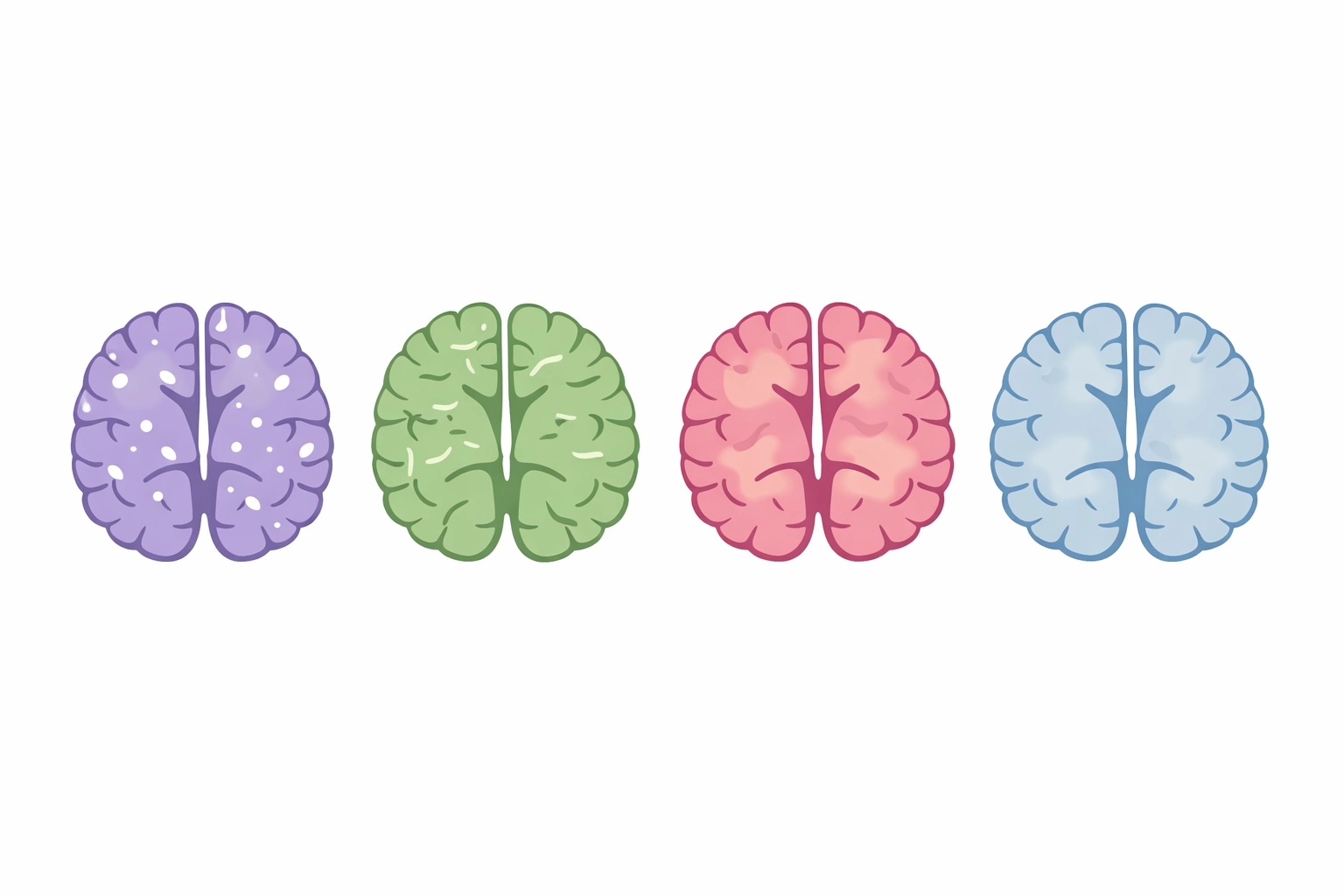
Alzheimer's disease accounts for 60-80% of dementia cases. It's characterized by the accumulation of abnormal protein deposits: amyloid plaques and tau tangles: that disrupt communication between neurons. Memory problems typically appear first, followed by confusion, mood changes, and progressive loss of independence.
Vascular dementia, the second most common type, results from reduced blood flow to the brain. Strokes: whether large, noticeable events or tiny, silent ones: damage brain tissue. Unlike Alzheimer's, vascular dementia often progresses in a stepwise fashion, with sudden declines followed by periods of stability.
Lewy body dementia involves abnormal protein deposits called Lewy bodies throughout the brain. Patients often experience visual hallucinations, fluctuating cognition, and movement problems similar to Parkinson's disease.
Frontotemporal dementia primarily affects the frontal and temporal lobes: areas responsible for personality, behavior, and language. Unlike Alzheimer's, memory often remains relatively intact in early stages, but personality changes can be profound and disturbing.
There are others: mixed dementia, Parkinson's-related dementia, alcohol-related dementia. Each has its own trajectory, its own pattern of loss. But they all share one devastating commonality: by the time most people seek help, significant damage has already occurred.
The Critical Window: Why Early Detection Matters
Here's what keeps me up at night as both a physician and a founder working in brain health: we're remarkably bad at catching dementia early.
Families adapt. They compensate. The patient becomes skilled at masking deficits: a survival mechanism that actually works against early intervention. By the time confusion, missed medications, or a fall finally raises alarms, we’ve often missed years of subtle decline.
Yet early detection matters tremendously. While we can't cure most dementias, we can:
- Identify reversible causes (vitamin B12 deficiency, thyroid problems, medication side effects)
- Start medications that may slow progression in Alzheimer's disease
- Address vascular risk factors to prevent further damage
- Plan for legal, financial, and care needs while the patient can still participate
- Implement lifestyle interventions that may preserve function longer
The challenge lies in finding screening tools that are practical, sensitive, and accessible in real-world settings.
Why I Love the Clock Drawing Test
Enter the clock drawing test: a deceptively simple tool that I've come to favor over the more commonly used Mini-Mental State Examination (MMSE).
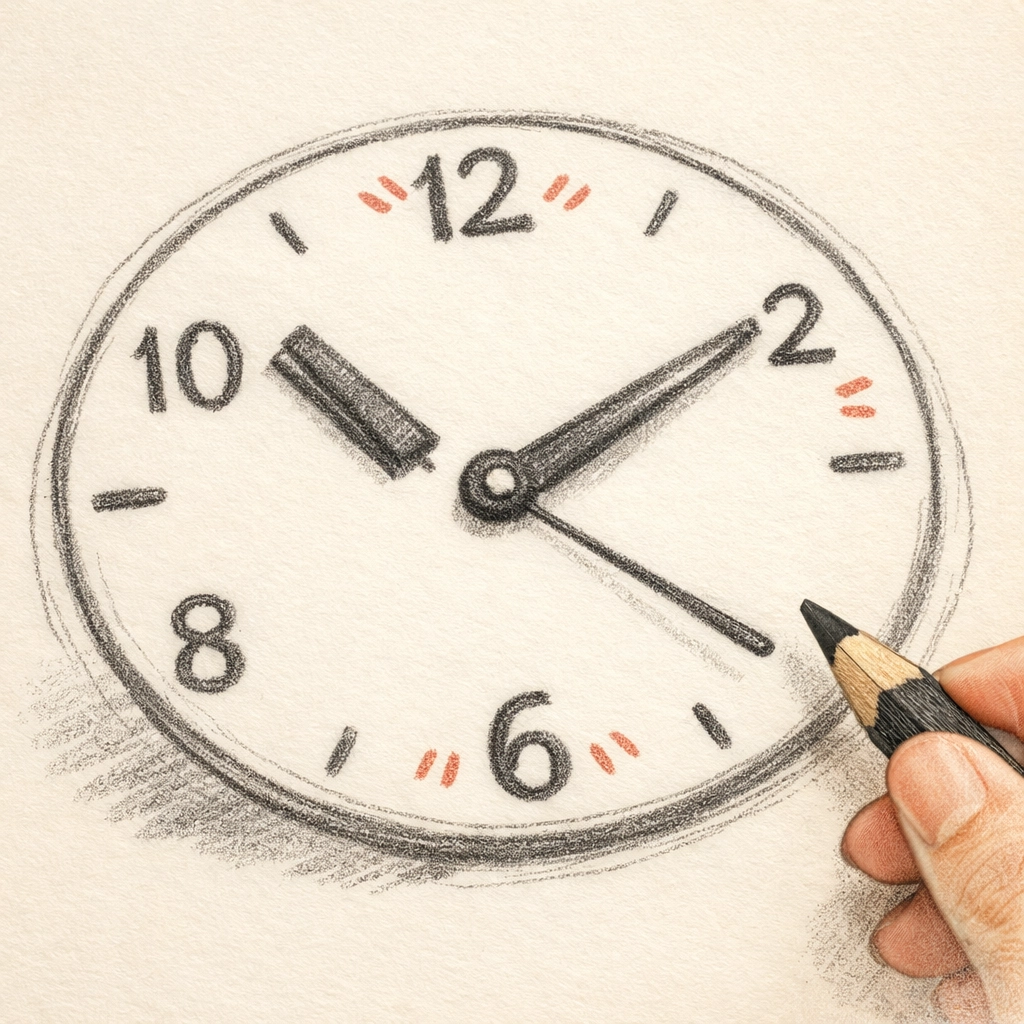
Here's how it works: I hand you a blank piece of paper and ask you to draw a clock showing a specific time, usually 11:10 or 3:00. That's it. Sixty seconds, one sheet of paper, and I've gained remarkable insight into your cognitive function.
Why do I prefer it over the MMSE? Because the clock test brilliantly captures executive function: the brain's ability to plan, organize, and execute tasks: even when memory seems relatively intact.
The MMSE is heavily weighted toward memory and orientation. A patient can score reasonably well on the MMSE while harboring significant executive dysfunction that's already interfering with medication management, finances, and safety. The clock test catches what the MMSE misses.
Drawing a clock requires you to:
- Recall what a clock looks like (memory)
- Plan the layout on the page (executive function)
- Place numbers appropriately in space (visuospatial ability)
- Understand the abstract concept of time (abstract thinking)
- Coordinate hand movements to execute the drawing (motor function)
- Position the hands correctly to show the requested time (problem-solving)
When I see a clock with numbers crowded on one side, hands placed randomly, or a misshapen circle, I'm witnessing the breakdown of neural networks. Small, cramped clocks with irregular shapes. Distorted faces. Numbers in the wrong sequence. These aren't just drawing mistakes: they're windows into cognitive function.
In frontotemporal dementia, patients might draw beautifully organized clocks but place the hands incorrectly because they've lost conceptual understanding of time. In Alzheimer's disease, clocks are often unusually large and numbers poorly placed. In vascular dementia following strokes, the deficit pattern might reflect the specific brain regions affected.
The test isn't perfect: it can miss very mild impairment, and it doesn't tell me what type of dementia we're dealing with. But as a quick, non-threatening screening tool in a busy clinical setting? It's invaluable.
Supporting Brain Health: Where Lion's Mane and Shilajit Enter the Picture
Now, here's where my physician perspective intersects with my work as a founder of UpCup Koffee.
For years, I’ve seen how heavy a cognitive diagnosis can feel for families—especially when the “plan” sounds vague, or when the options feel limited to lifestyle changes and medications that may help some people but not others. And while lifestyle foundations still matter (more on that below), the gap between interesting research and everyday routines has always bothered me.
That’s part of what pushed our founding team to look closely at ingredients with emerging, credible signals for brain support—especially those that could fit into something as normal as your morning coffee. Two that kept rising to the top: Lion's Mane mushroom and Shilajit.
Lion's Mane (Hericium erinaceus) has demonstrated fascinating neuroprotective properties in both animal and human studies. Research suggests it may stimulate the production of nerve growth factor (NGF): a protein crucial for the growth, maintenance, and survival of neurons. In human trials, elderly patients with mild cognitive impairment showed improvement in cognitive function scores after taking Lion's Mane extract. The benefits disappeared when supplementation stopped, suggesting ongoing support may be necessary.
Shilajit, a mineral-rich compound formed over centuries from decomposed plant material in mountain ranges, has shown promise in animal models for reducing cognitive decline and supporting mitochondrial function: the energy powerhouses of our cells. Human studies have explored its potential in supporting brain health, particularly in aging populations.
I want to be clear: these aren't cures. They're not replacements for medical evaluation or treatment. But as part of a comprehensive approach to brain health: alongside cardiovascular exercise, cognitive stimulation, social engagement, quality sleep, and management of vascular risk factors: they represent an accessible, evidence-based tool.
That's precisely why we included both Lion's Mane and Shilajit in UpCup Koffee. As founders, we wanted to create something that fit seamlessly into daily routines while delivering compounds with legitimate research behind them. You can find detailed information about the studies supporting these ingredients on our science page at upcupkoffee.com.
The Path Forward
Dementia remains one of the most challenging diagnoses in medicine: for patients, families, and physicians alike. But we're not helpless.
Early detection through simple tools like the clock drawing test opens a critical window. During that window, we can address reversible causes, implement protective strategies, and potentially slow decline. We can start conversations about the future while our loved ones can still participate. We can build support systems before crisis hits.
And increasingly, we have evidence-based compounds that may support brain health when used consistently and as part of a broader wellness strategy.
If you're concerned about memory changes in yourself or a loved one, don't wait. Talk to a healthcare provider. A simple screening can provide crucial information. And remember: cognitive health isn't just about avoiding disease; it's about nurturing the remarkable organ that makes you uniquely you.
Your brain built a lifetime of memories, relationships, and capabilities. It deserves our attention, our care, and our best efforts to protect it for as long as possible.
As you navigate your own health journey or support someone you love through theirs, remember that small, consistent actions matter. Whether it's a morning cup of coffee enriched with brain-supporting compounds, a daily walk, a challenging puzzle, or simply picking up the phone to call an old friend: each choice shapes your cognitive future.
The conversation about brain health doesn't end with diagnosis. It begins there. And in that beginning lies hope, agency, and the possibility of preserving what matters most.