Premium Coffee with Functional Benefits
upcupkoffee.com
Picture this: you’re standing in the supplement aisle—beautiful packaging in your hand, big promises on the label—enhanced focus, cognitive clarity, immune support. The marketing is compelling. The price point seems reasonable. But here’s the thing—if those beneficial compounds can’t actually make it past your digestive system and into your bloodstream, you might as well be drinking expensive sawdust.
Now, imagine hearing this from someone who’s spent a career watching biology play out in real time. Bill McArthur—Dr. Bill to many of his patients—finished family medicine residency training in 2000 and has spent 20+ years practicing across outpatient primary care, inpatient settings, nursing home care, and now full-time in the emergency department. Over and over, he’s seen the same truth: two people can take the same medication—or the same supplement—and have completely different results because their bodies process, absorb, and respond differently.
That clinical reality is what led him—along with two other founders—to build UpCup with a physician’s obsession for what’s actually usable. His understanding of bioavailability doesn’t come from marketing buzzwords; it comes from years of seeing how different bodies handle medications and nutrients in real clinical settings. And that gap between what products promise and what they actually deliver? It often comes down to one crucial word: bioavailability.
The Chitin Problem Nobody Talks About
Let me take you on a quick journey inside a mushroom cell. Unlike the plants we typically consume: your spinach, your berries, your kale: mushrooms aren’t actually plants at all. They’re fungi, and their cells are protected by something called chitin. If that word sounds familiar, it’s because chitin is the same tough, fibrous material that forms the exoskeletons of insects and crustaceans.
Here’s where it gets interesting: humans don’t produce the enzymes necessary to break down chitin. We simply lack the biological tools. When you consume raw mushroom powder: even if it’s organic, even if it’s from the most pristine growing conditions: your body can only access about 20% of the beneficial compounds locked inside those chitin-fortified cell walls. The remaining 80%? It passes right through your system, unutilized and wasted.
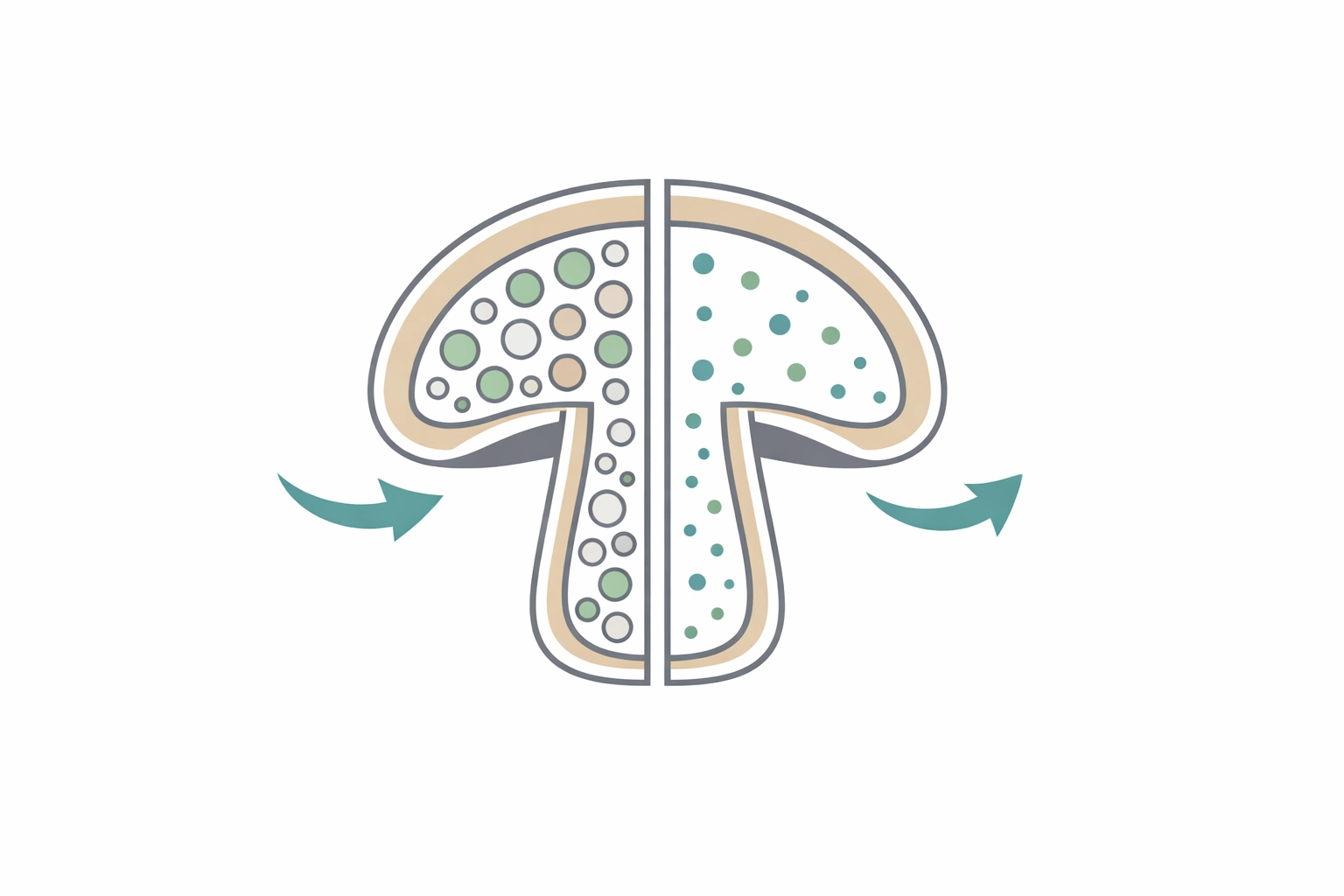
This isn’t just theoretical speculation. Research has demonstrated that unextracted mushroom powders have dramatically poor bioavailability compared to properly extracted formulations. We’re talking about a difference of approximately 10-fold in terms of actual absorption. That’s not a minor variation: that’s the difference between a product that works and one that simply occupies space in your cabinet.
Why Bioavailable Form Matters—Especially With This Trio
Now, imagine you’re trying to get real, repeatable benefits from a daily ritual—something as simple as your morning cup—without needing a chemistry lesson to trust what’s inside. You quickly discover that “included on the label” doesn’t always mean “available to your body.” Why? Because the functional compounds you’re after—and the minerals that come along for the ride—need to be in forms your system can actually absorb and use.
This is where bioavailable formulation becomes absolutely essential—and it’s precisely what separates premium products like UpCup from the countless powders flooding the market. The founders built the blend around a deliberate trio—NAD+ support, Lion’s Mane, and Shilajit—because the goal isn’t novelty. It’s noticeable, reliable benefits.
The Hot Water Extraction: Unlocking Immune Support
When you steep mushrooms in hot water, you’re specifically targeting beta-glucans and polysaccharides: complex carbohydrates that have profound effects on immune system function. These water-soluble compounds are responsible for many of the immune-modulating properties that have made mushrooms like reishi, chaga, and turkey tail celebrated in traditional medicine for centuries.
Beta-glucans work by activating immune cells: macrophages, natural killer cells, and neutrophils: essentially teaching your immune system to recognize and respond more effectively to threats. But here’s the crucial point: these compounds remain locked behind chitin walls until hot water extraction breaks them free.
The Lion’s Mane + NAD+ + Shilajit Connection: Where “Functional” Becomes Felt
Now, consider what you’re actually hoping to experience from a functional blend. You’re not chasing hype—you’re looking for that steady, clear kind of momentum: better focus, smoother energy, and a brain that feels more “online” without the edge.
That’s the practical reason the founders anchored UpCup around a simple trio:
- Lion’s Mane for cognitive clarity and long-term brain support—often discussed in the context of nerve-supporting pathways and overall mental performance.
- NAD+ support for cellular energy and resilience—because how you feel in your day often starts at the cellular level.
- Shilajit for its naturally occurring, mineral-rich profile—valued for minerals and fulvic compounds that are often described as helping the body make use of what it takes in.
In other words, the blend is designed so the “good stuff” isn’t just present—it’s positioned to be usable.
The UpCup Difference: Clean Science, Doctor-Formulated Standards, and Built on Trust
When the three founders at UpCup began developing their formulation, they started with a fundamental question: How do we build something you can feel—something that isn’t just “functional” in theory, but designed to deliver genuinely bioavailable support in a daily cup?
For Bill McArthur—one of the founders, and the person most relentlessly involved in product development and quality control—this meant grounding every decision in clean science: fewer gimmicks, clearer standards, and a fixation on what your body can realistically use. In practice, that’s also what we mean by doctor-formulated—a quality bar shaped by medical-style thinking about consistency, safety, and measurable inputs, not trend-chasing.
That’s why the team anchored the formula around a deliberate trio—Lion’s Mane, NAD+ support, and Shilajit—and why the conversation keeps coming back to bioavailability. Shilajit, in particular, is valued for its naturally occurring, mineral-rich profile, and the goal is simple: minerals and functional compounds that are usable, not just impressive on paper.
But here’s the thing—bioavailability doesn’t begin and end with extraction. It starts upstream, with ingredient quality you can build on: fruiting-body sourcing (not filler-heavy shortcuts), careful handling from harvest through drying, and a formulation philosophy that prioritizes clarity over clutter. Clean science, in this context, isn’t a lab-coat aesthetic—it’s the decision to keep inputs honest, consistent, and purposeful, so the body isn’t left trying to “make sense” of a noisy blend.
And because UpCup is built around a coffee ritual, the goal is simple: pair that daily habit with functional ingredients prepared in forms your system can actually use. When the inputs are clean—and the extraction approach is designed to open access to key mushroom compounds—you’re not just adding something trendy to coffee. You’re setting the stage for maximum impact in the places you actually care about: steadier energy, clearer thinking, and the kind of brain support that feels practical, not performative.
This isn’t about shortcuts or cost-cutting. It’s about honoring the science while respecting the traditional knowledge that has valued these ingredients for generations. The result is a product designed so the beneficial compounds and minerals are positioned to reach your system in a more usable way—supporting clarity, steady energy, and everyday resilience.
For retail buyers evaluating premium shelf space at establishments like Whole Foods or Kroger, this distinction matters enormously. Consumers are becoming more educated, more discerning. They’re asking questions about extraction methods, ingredient sourcing, and bioavailability. They want products backed by scientific understanding, not just marketing claims.
What Bioavailability Actually Means for Your Customers
Let’s bring this down to earth for a moment. Imagine yourself sipping your morning coffee: perhaps you’ve added UpCup’s mushroom extract. Within 30 to 45 minutes, you notice a subtle shift: clearer thinking, improved focus, a sense of calm energy that doesn’t come with jitters or crashes.
That’s not placebo. That’s bioavailability in action.
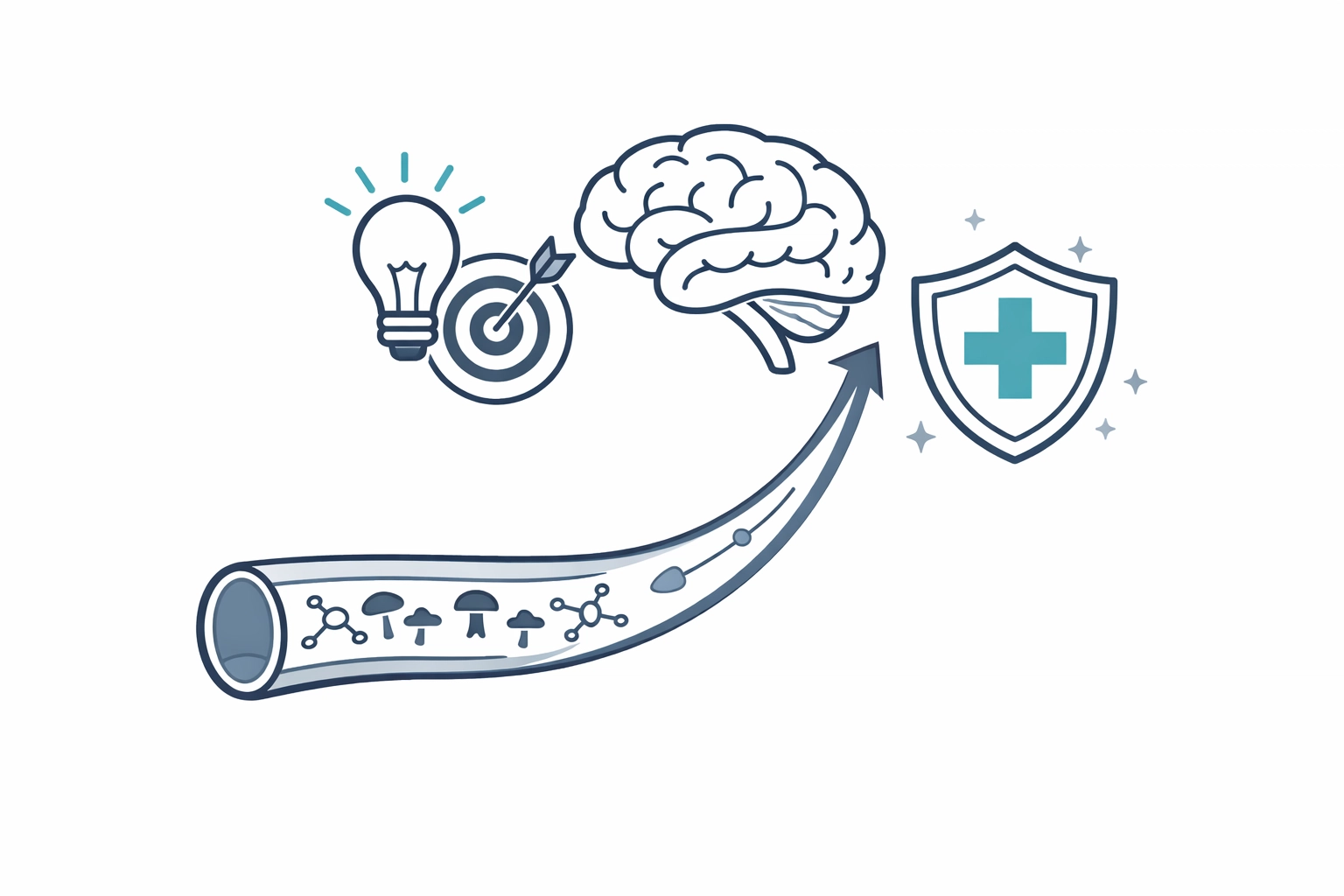
When triterpenes from lion’s mane reach your brain, they support the production of proteins essential for neuron growth and maintenance. When beta-glucans enter your bloodstream, they prime your immune system to function more effectively. These aren’t abstract concepts: they’re measurable biological processes that occur because the extraction method made those compounds accessible.
Contrast this with consuming a raw mushroom powder where 80% of those same compounds never make it past your digestive system. You might experience some benefit from the 20% that’s naturally accessible, but you’re fundamentally leaving the majority of the mushroom’s potential on the table: or more accurately, in your intestinal tract.
The Retail Imperative: Premium Products Require Premium Standards
Here’s what I want retail buyers to understand: the mushroom supplement category is experiencing explosive growth, but it’s also becoming crowded with products of wildly varying quality. Consumers are investing their trust and their money in these products, expecting results that match the promises.
UpCup represents what I believe should be the standard in this space: not the exception. Bioavailability isn’t a luxury feature; it’s a fundamental requirement for any functional product claiming cognitive or immune benefits. Doing things the right way has costs, certainly—but those costs translate directly into trust, consistency, and results people can feel.
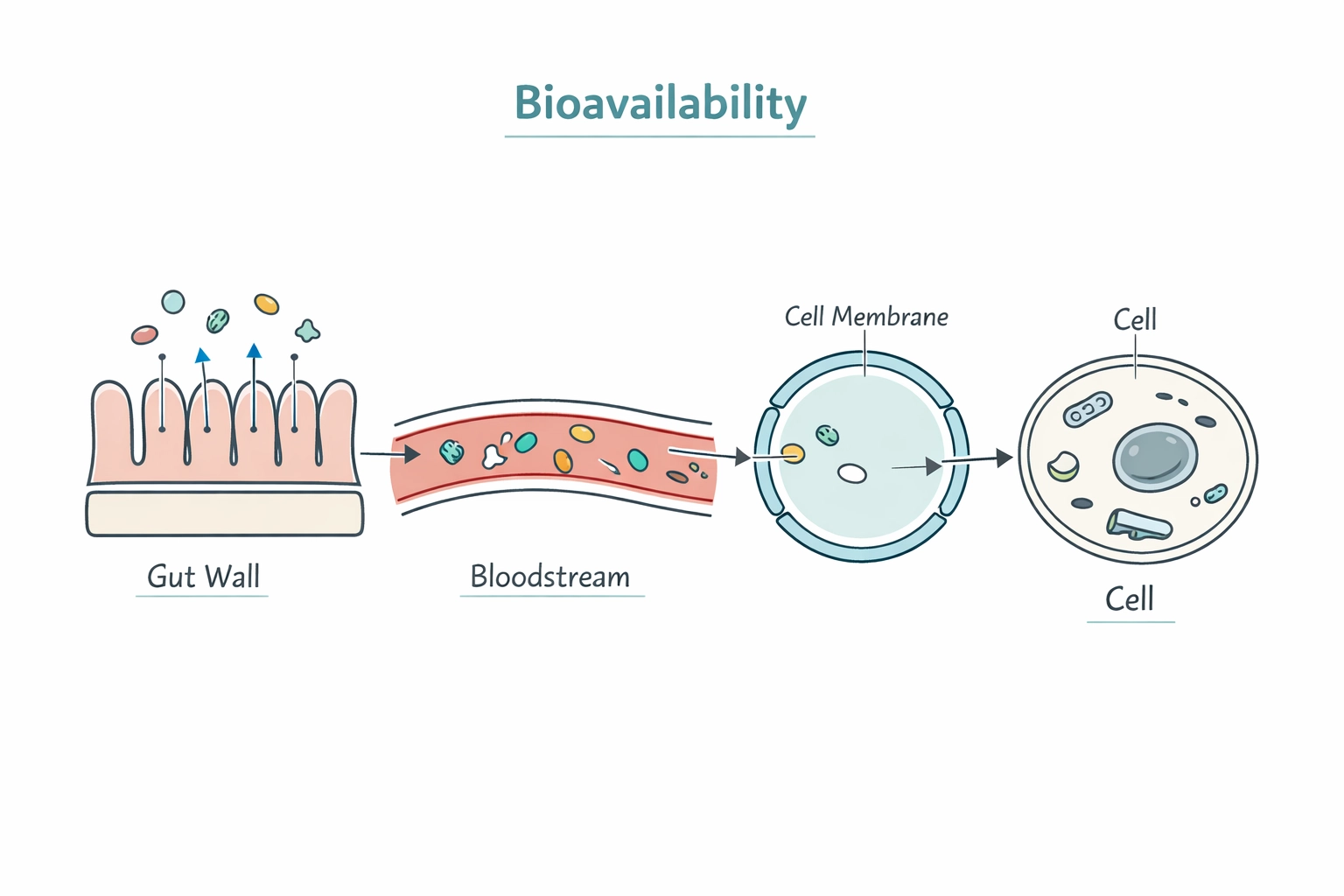
It’s worth considering this: it’s not enough that a product contains Lion’s Mane or includes a trendy functional ingredient on the label. What matters is whether the formula is built around bioavailable inputs—ingredients and mineral forms your body can realistically access and apply.
When you stock UpCup on your shelves, you’re not just offering another functional add-in. You’re offering a founder-built product—crafted around a clear trio (NAD+ support, Lion’s Mane, Shilajit) and a simple promise: ingredients chosen for usefulness, not just shelf appeal.
The Path Forward: Education and Excellence
The conversation around mushroom supplements is evolving rapidly. Novel extraction technologies are emerging: some achieving bioavailability rates as high as 92% compared to 5% for standard water-only extraction. The science is advancing. Consumer education is deepening.
In this landscape, products like UpCup that prioritize both traditional wisdom and modern biomedical understanding will naturally rise to the top. Because ultimately, what matters isn’t just what you put in the bottle: it’s what actually reaches the brain, the immune system, the cells where these compounds exert their effects.
For retail partners evaluating their functional offerings, I encourage you to ask the hard questions: What standards guide ingredient selection? How does the brand think about bioavailability in real-world use? What quality controls are in place batch to batch? Can the manufacturer provide third-party testing that verifies their claims?
These questions separate premium products from pretenders. And in a category where consumer trust is paramount, those distinctions matter enormously.
Your customers deserve mushroom extracts that actually work: formulations where the beneficial compounds reach their brains, support their cognitive function, and enhance their immune systems. That’s not too much to ask. That’s simply what good medicine looks like.