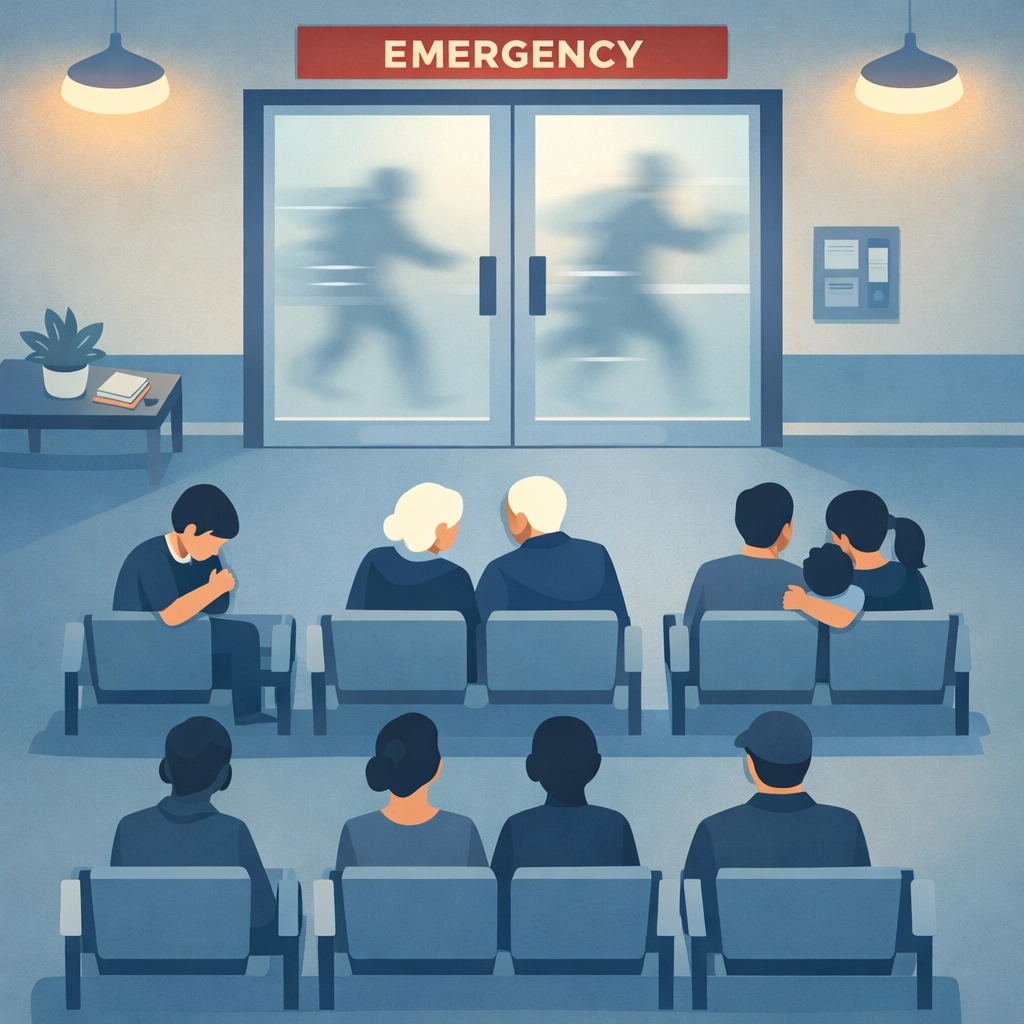
Picture, for a moment, the waiting room of a busy emergency department on a Saturday night. A young man clutches his wrist: probably a skateboarding injury. An elderly woman sits quietly, her daughter beside her, concern etched across both their faces. A father paces near the registration desk, his toddler coughing intermittently. And somewhere behind those double doors, beyond the curtain you cannot see, a trauma bay erupts with controlled chaos as a team fights to save someone’s life.
Here’s the thing: that father might have arrived first. The young man with the wrist injury might have been waiting for forty-five minutes. Yet when the elderly woman’s name is called within ten minutes of arrival, you witness the invisible architecture of emergency medicine at work. This is triage. And understanding it might transform your frustration into something closer to relief.
The Symphony of Severity
Emergency departments don’t operate like coffee shops or bakeries where the first person in line gets served first. They function more like a complex symphony: each instrument playing when the conductor signals, creating harmony from what would otherwise be chaos. The conductor, in this case, is the triage system: a standardized framework designed not for convenience, but for survival.
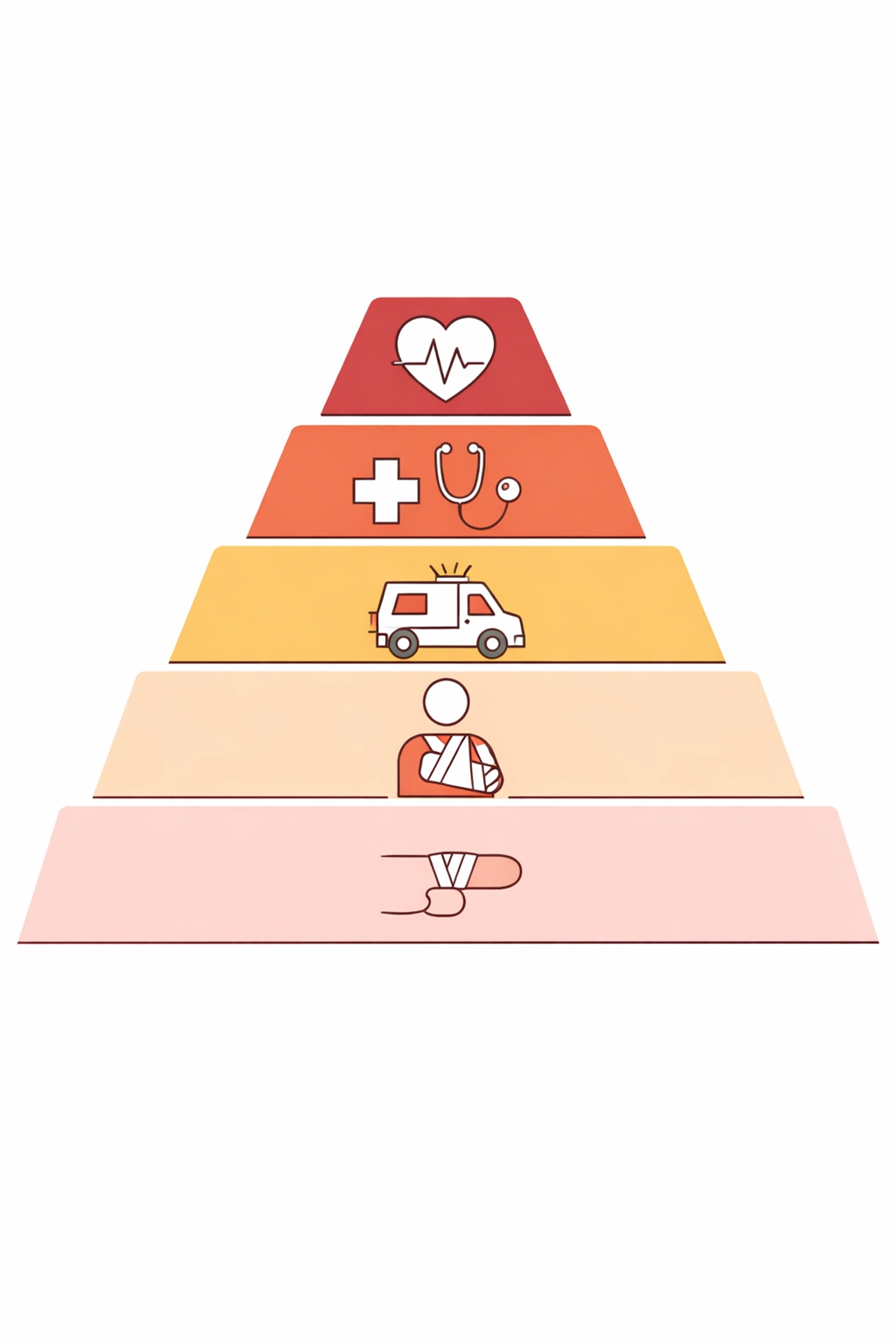
In the United States, most emergency departments use the Emergency Severity Index, or ESI: a five-level triage system that categorizes patients based on acuity. Level 1 patients need immediate, life-saving interventions: cardiac arrest, severe respiratory distress, major trauma, active seizures. These patients cannot wait. Level 2 patients face emergent conditions requiring rapid assessment: think chest pain, difficulty breathing, or altered mental status. Level 3 patients have urgent but stable conditions. Levels 4 and 5? These patients, while uncomfortable or concerned, are physiologically stable enough to wait safely.
The triage acuity level serves as what researchers call a “proxy measure”: an indicator of how long someone can safely wait for medical evaluation. And therein lies the truth that frustrates so many families: your wait time in the lobby is often inversely proportional to how critically ill you are.
Reframing the Wait
I know what you’re thinking. You drove here in pain. You’re worried. You watched three people go back before you, and the frustration feels justified. But consider this perspective shift: one I wish I could whisper to every person in that waiting room: if you’re waiting, your body is stable enough to give you that time.
When I work a shift in the ER, I’m acutely aware of what’s happening behind those doors that families cannot see. The woman who was called back immediately? She’s having a heart attack, and every minute without intervention increases her risk of permanent heart damage or death. The teenager who bypassed the line? He arrived by ambulance with a penetrating chest wound. The elderly man who seemed to disappear into a treatment room within seconds? Stroke protocol: because brain cells die by the millions with each passing moment.
Meanwhile, that father with the coughing toddler: his child likely has croup or a viral illness. Uncomfortable? Absolutely. Worrisome for a parent? Without question. But life-threatening in this moment? Probably not. The wait, though agonizing for the family, is actually a clinical indicator that the child is maintaining adequate oxygen saturation, has stable vital signs, and doesn’t require immediate intervention.
This is life-over-limb medicine. It’s not personal: it’s physiological priority.
The Invisible Work Behind the Curtain
What families often don’t realize is that even when I’m not physically in your room, I’m working on your case. Between the moment you’re placed in a bay and when I return with results, I’m reviewing lab work, consulting specialists, coordinating imaging, managing the critical patient three rooms over, and making split-second decisions about resource allocation.
Emergency medicine requires a particular kind of sustained mental clarity: the ability to juggle multiple complex cases simultaneously while maintaining sharp clinical judgment. During 12-hour shifts, that cognitive load becomes physically demanding. It’s actually what led me and my co-founders to create UpCup Koffee. As physicians and healthcare professionals, we understood that the coffee we reached for during overnight shifts needed to be more than just caffeine: it needed to support genuine cognitive function without the crash that comes from standard breakroom coffee.
That’s why we built UpCup with Clean Science principles from the ground up—guided by a simple founder vision: create a coffee that delivers sustained, clean energy for the grueling demands of ER work, without the jitters, stomach flip, or mid-shift crash that standard coffee so often brings. We wanted something that could keep you steady when the night is long, the decisions are heavy, and your attention has to stay razor-sharp.
So we built it around functional benefits we could actually feel and stand behind—ingredients like NAD+ to support cellular energy, Lion’s Mane for cognitive support, and Shilajit for sustained focus—choices we made together as founders because we knew firsthand what high-stakes environments require. It’s Doctor-Formulated in spirit and intent—not because of flashy claims, but because the goal was always performance you can trust when clarity matters most.
Premium Coffee with Functional Benefits. That’s not marketing language: it’s the standard we needed for ourselves. (You can learn more at upcupkoffee.com.)
The Mathematics of Emergency Medicine
Here’s the clinical reality: triage systems significantly improve patient outcomes by optimizing resource allocation and reducing wait times for those who need immediate care. Research demonstrates that systematic triage prevents critically ill patients from deteriorating in waiting rooms while ensuring stable patients receive care in appropriate sequence.
The Emergency Severity Index doesn’t just categorize by severity: it also estimates the number of resources each patient will likely require. A patient with an isolated fracture might need X-rays and a splint. A patient with multi-system trauma might need CT scans, laboratory work, specialist consultations, blood transfusions, and emergency surgery. By anticipating resource needs during triage, emergency departments can better coordinate care and prevent bottlenecks.
Level 2 patients: those with emergent conditions: require assessment immediately but might not need to be physically rushed to a resuscitation bay. Level 3 patients can safely wait up to thirty minutes. Levels 4 and 5 can wait longer, though “safely wait” doesn’t mean “comfortable wait.” Pain matters. Anxiety matters. But in the hierarchy of emergency medicine, mortality risk takes precedence over discomfort.
When the System Feels Broken
I won’t pretend the system is perfect. Emergency departments across the country face overcrowding, understaffing, and resource limitations that create real delays: even for high-acuity patients. Sometimes the wait is unconscionably long because the system itself is strained beyond capacity, not because your condition isn’t serious.
But understanding triage helps you distinguish between appropriate medical prioritization and systemic dysfunction. If you’re triaged as Level 2 or 3 and you’re waiting hours while the waiting room fills with Level 4 and 5 patients who arrived after you, that’s a resource problem: not a triage problem. It means the department is overwhelmed, beds are full, and the staff is doing everything possible with limited capacity.
In those moments, advocating effectively means understanding what information helps medical staff reprioritize. If symptoms change: if pain dramatically worsens, if breathing becomes labored, if mental status shifts: return to the triage nurse immediately. Those clinical changes might elevate your acuity level and trigger reassessment.
The Partnership Between Patients and Providers
Here’s what I wish every patient and family member understood: we’re on the same team. Your goal is to receive appropriate, timely care. My goal is to provide it while ensuring no one dies in my waiting room because I was distracted by a non-emergency.
The best thing you can do as a patient or family advocate is to provide clear, accurate information during triage. Don’t minimize symptoms to seem stoic, but don’t catastrophize either. Answer questions directly: When did symptoms start? Have they changed? Do you have a medical history that might be relevant? Are you taking medications that could interact with treatments?
That triage conversation: often just three to five minutes: shapes your entire emergency department experience. The nurse conducting triage isn’t being dismissive; they’re gathering the specific data points that determine where you fit in the acuity hierarchy.
And if you’re waiting? That’s your body telling you something important: you’re stable enough to wait. It’s not the answer you want, but it’s often the answer that means you’re going to be okay.
The Compassionate Reality
I think about this every shift: the tension between individual experience and collective need. For you, sitting in that waiting room, your pain or your child’s fever or your parent’s confusion is the most important thing in the world. And it should be. That’s human. That’s love. That’s the fierce advocacy that drives families to seek care.
But for me, standing behind those doors, I’m holding the collective weight of everyone who walked through them. I’m triaging not just medical conditions but time itself: an irreplaceable resource that I must distribute based on who will suffer irreversible harm soonest.
This isn’t about who matters most. It’s about who needs intervention most urgently. Every person in that waiting room matters. Every person deserves compassionate, competent care. But not every person faces the same immediate risk of death or disability.
Triage is the uncomfortable mathematics of emergency medicine: the systematic process that ensures we save the maximum number of lives with finite resources. It’s not personal. It’s not arbitrary. It’s the framework that allows emergency departments to function as true safety nets for communities.
Moving Forward Together
The next time you find yourself in an emergency department waiting room: for yourself or a loved one: I invite you to consider the invisible architecture at work. The delays you experience might actually be evidence of appropriate care prioritization. The patient who went back before you might be dying. And your wait, as frustrating as it feels, might be the clearest indicator that you’re physiologically stable.
None of this diminishes your discomfort or worry. But perhaps it can transform your perspective: from feeling ignored to understanding you’re being carefully monitored within a larger system designed to save lives.
As emergency medicine physicians, we navigate this tension every shift. We see your frustration. We feel the weight of your wait. And we’re working as fast as we safely can: sustained by the knowledge that triage, however imperfect, gives everyone the best chance at the care they need when they need it most.
That’s the triage truth. Not first-come, first-served: but most critical, most carefully attended. Always.